Mumbles and Swansea face Swansea Bay on the east; the best beaches lie along the south coast of Gower, ending at Rhossili in the far west.
1 Rhossili Bay and Worm’s Head
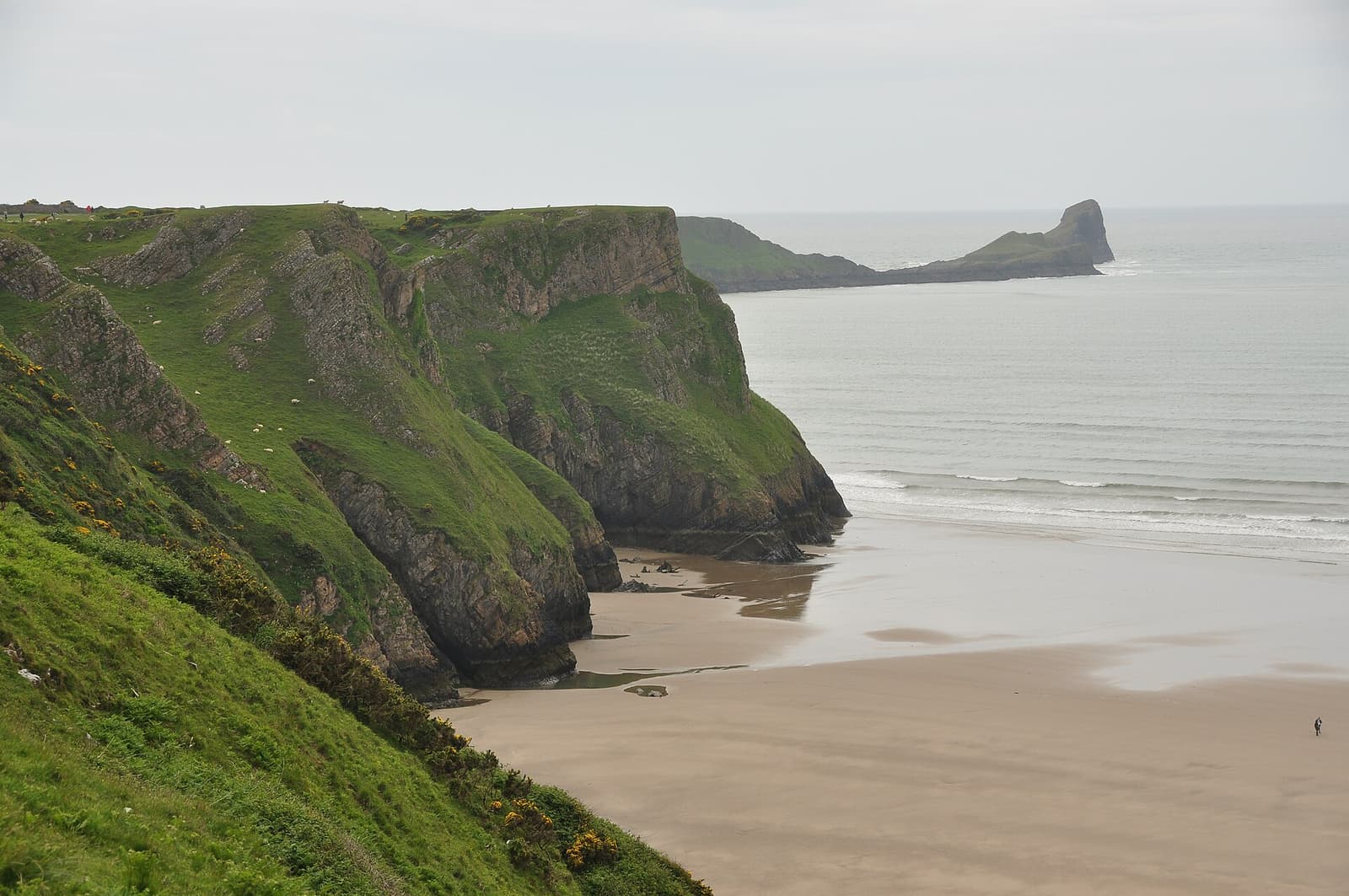
A vast beach under the downs, regularly voted one of the best in Britain. At low tide a causeway of rocks leads to Worm’s Head, a mile-long tidal island; the crossing is open for only a few hours either side of low water.
Practical: National Trust car park (fee). Check the crossing times at the coastguard lookout before setting out.
2 Three Cliffs Bay
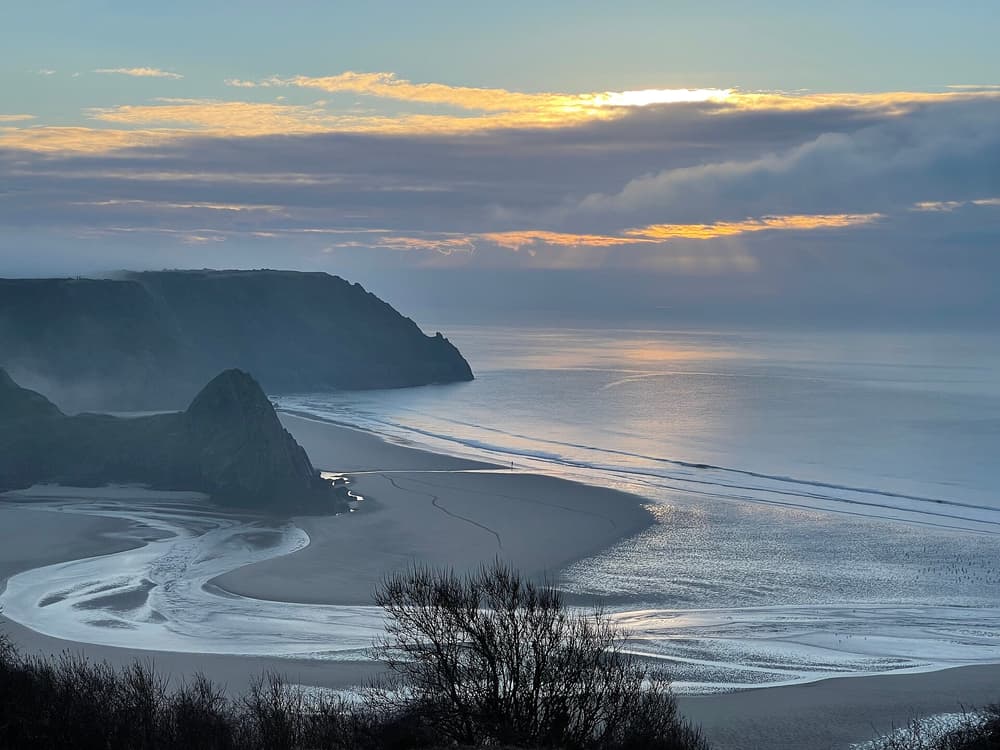
Three limestone pinnacles guard a bay where a river winds across the sand, overlooked by the ruins of Pennard Castle. It is a scenic walk rather than a swimming beach: currents in the river mouth are dangerous.
Practical: Walk from Penmaen or Parkmill; about 20–30 minutes.
3 Oxwich Bay
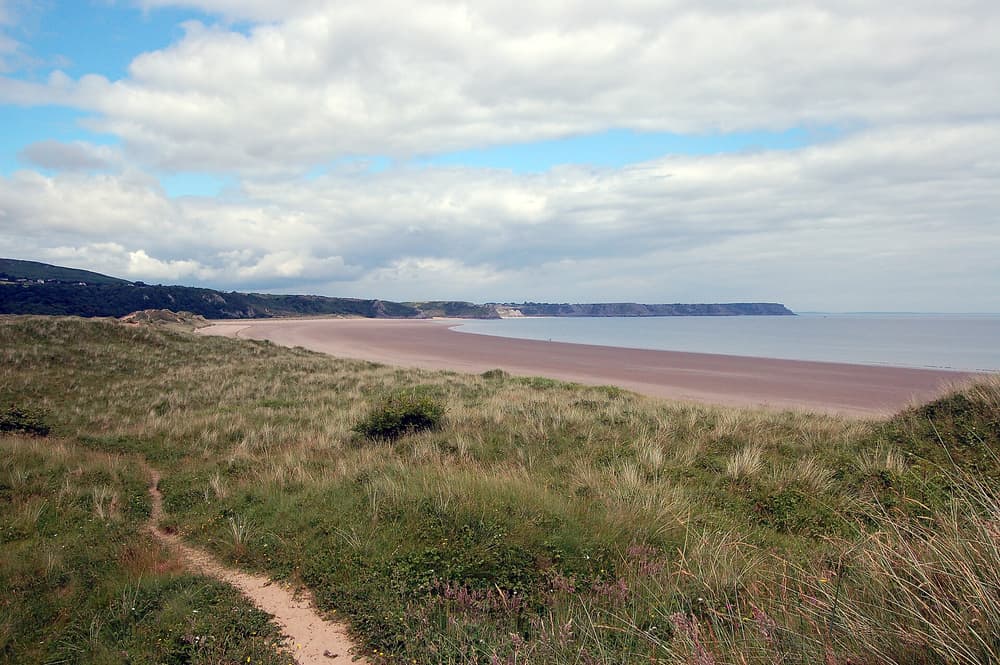
A long, sheltered beach backed by dunes and a nature reserve, with a Tudor manor house (Oxwich Castle) on the hill above.
Practical: Beach car park (fee). Oxwich Castle is a Cadw site with seasonal opening.
4 Mumbles
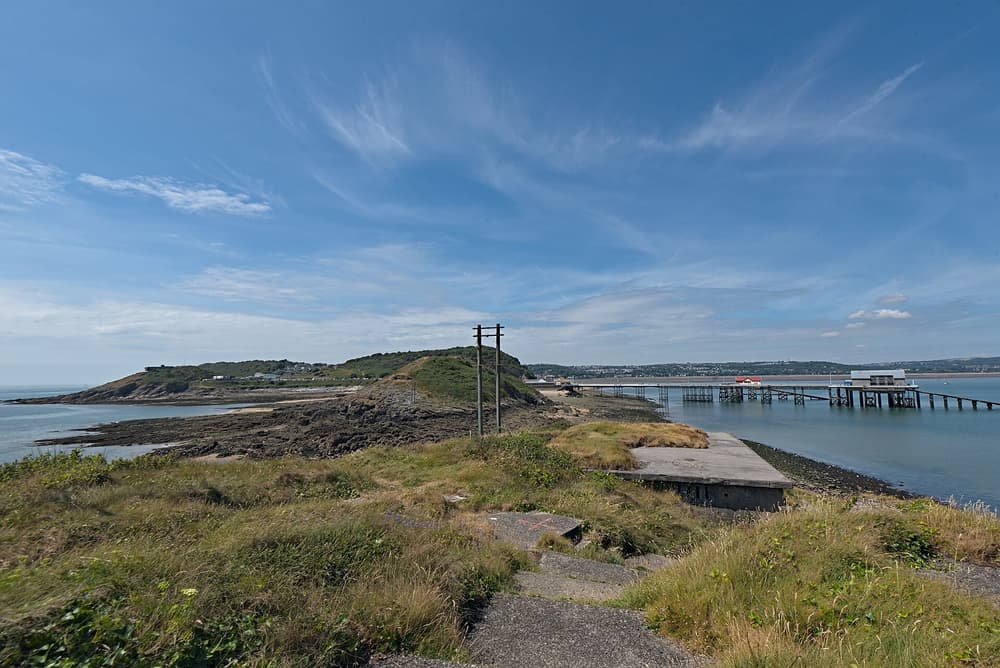
A Victorian seaside village at the end of the bay, with a restored pier, a lighthouse on an island off the headland, cafés along the front and the famous ice-cream parlours.
Practical: Free; the promenade is ideal for walking or cycling from Swansea.
5 Oystermouth Castle

A Norman castle on a hill above Mumbles, with a glass bridge across a ruined chapel and views over the bay.
Practical: Seasonal opening; small fee.
6 Swansea Marina and Maritime Quarter
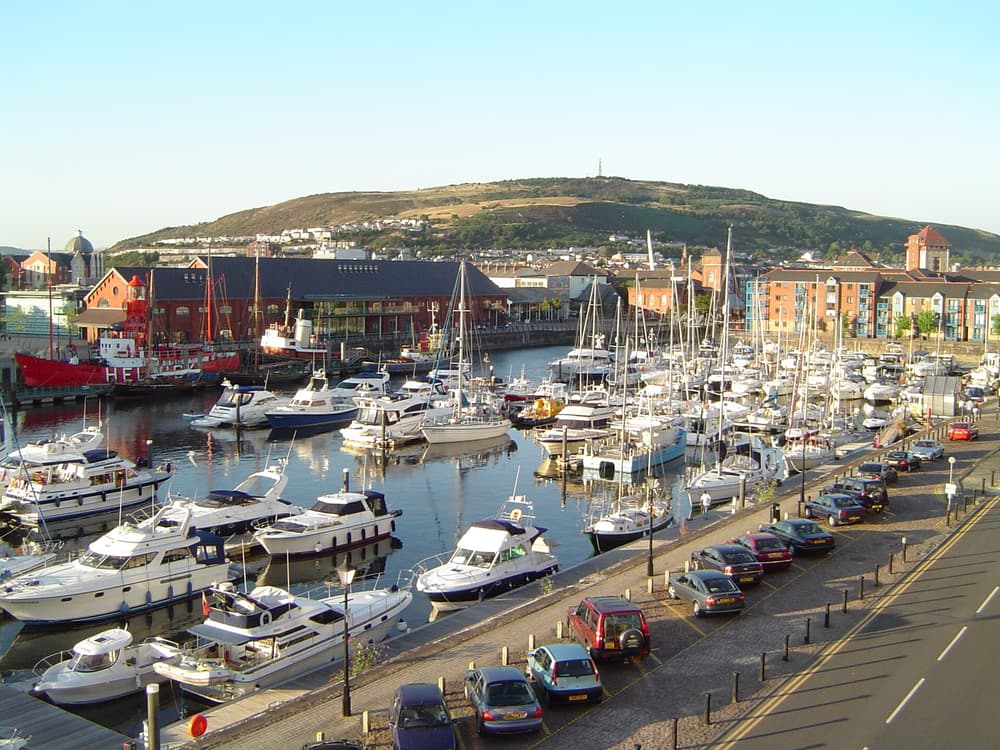
The old docks are now a marina surrounded by flats, cafés and the free National Waterfront Museum, which tells the story of Welsh industry. Swansea Market, nearby, is the largest covered market in Wales.
Practical: Museum free. The market sells laverbread, cockles and Welsh cakes.
7 Dylan Thomas Boathouse, Laugharne
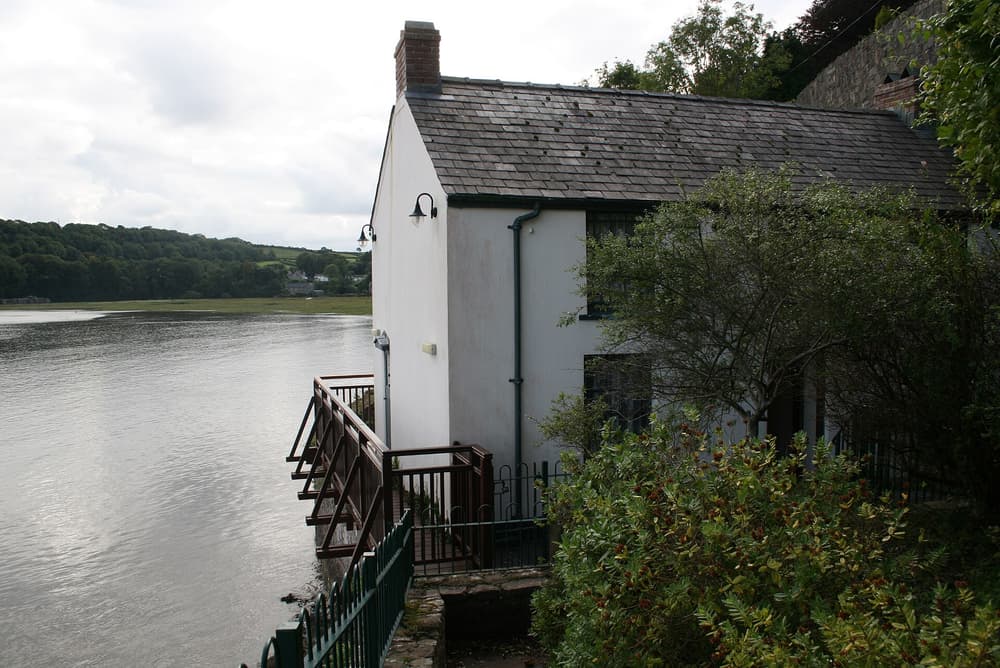
About an hour west in Carmarthenshire, the poet’s last home sits above the Taf estuary. His writing shed is preserved as he left it.
Practical: Ticketed; seasonal hours. Best combined with a drive to Tenby.