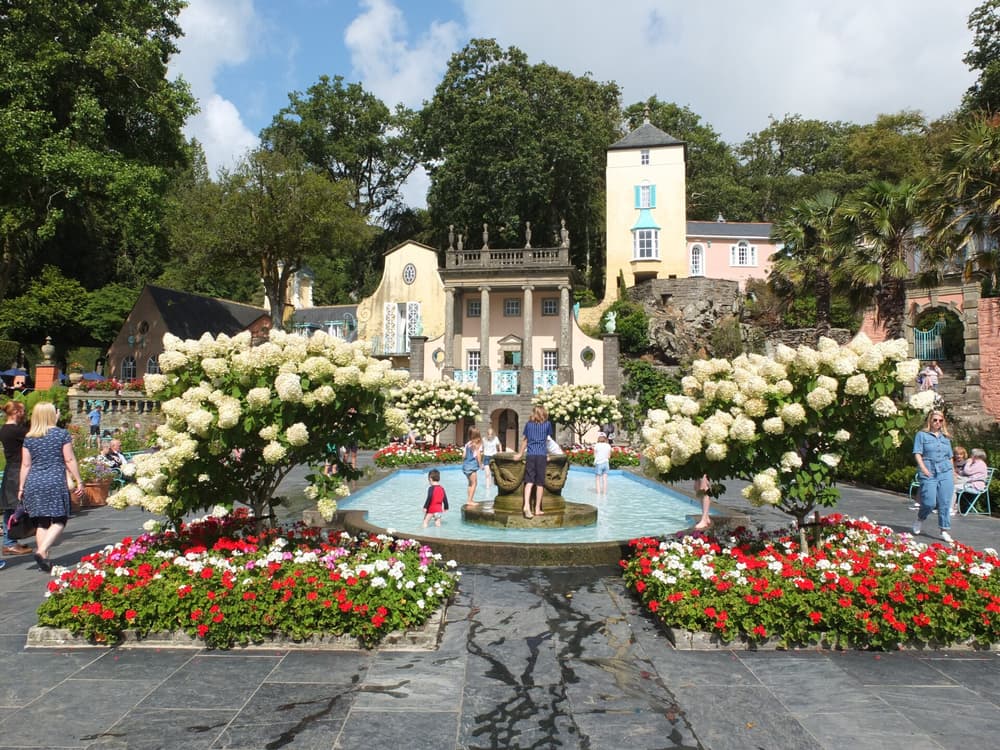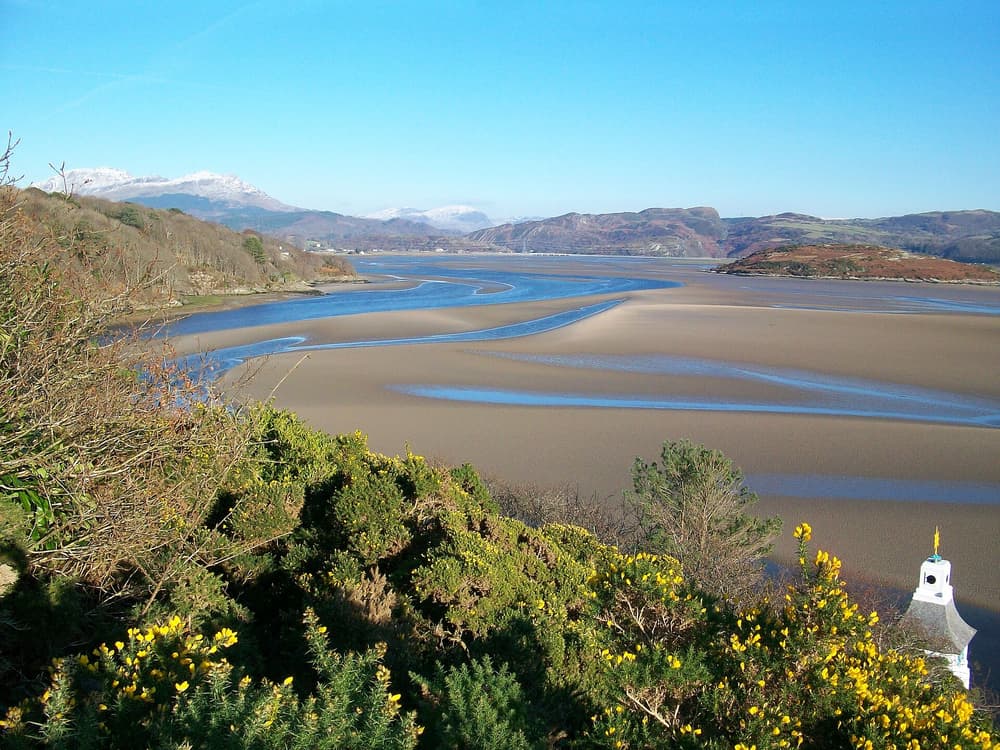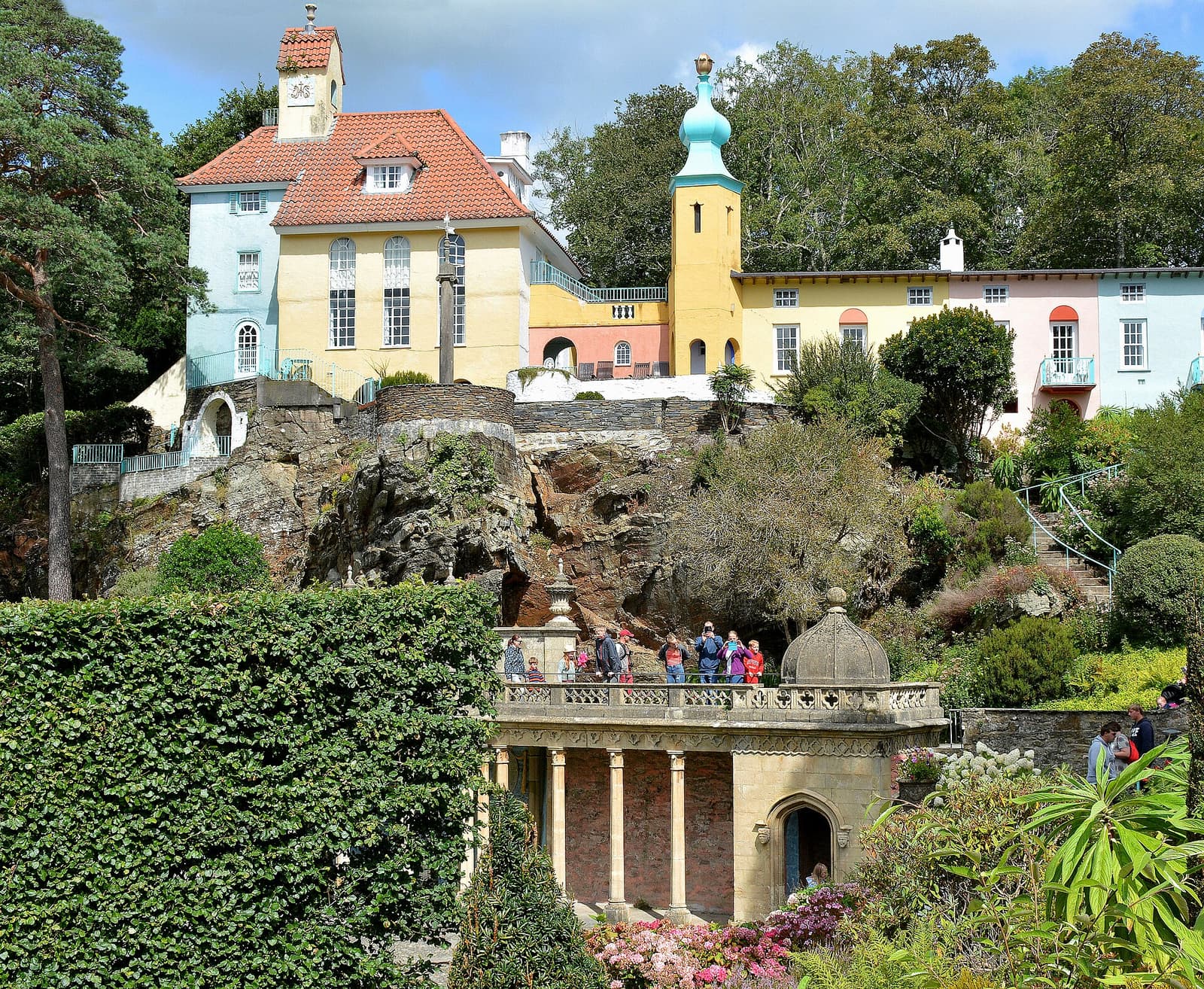
Between 1925 and 1975 the architect Sir Clough Williams-Ellis created Portmeirion on a private peninsula above the Dwyryd estuary. He set out to show that a beautiful place could be developed without spoiling it, and he filled it with colour-washed buildings, a campanile, a domed pantheon, statues and architectural salvage rescued from demolished buildings across Britain.
The village became famous as the setting of the 1960s television series The Prisoner and is now run as a hotel and visitor attraction, with gardens and woodland walks. It pairs naturally with the steam railways of Porthmadog, Harlech Castle and the Llŷn Peninsula.
Highlights
- The village: pastel houses, piazza, campanile and endless photo spots.
- The gardens and woods: the subtropical Gwyllt woodland and the estuary shore.
- Afternoon tea or lunch at the hotel by the water.
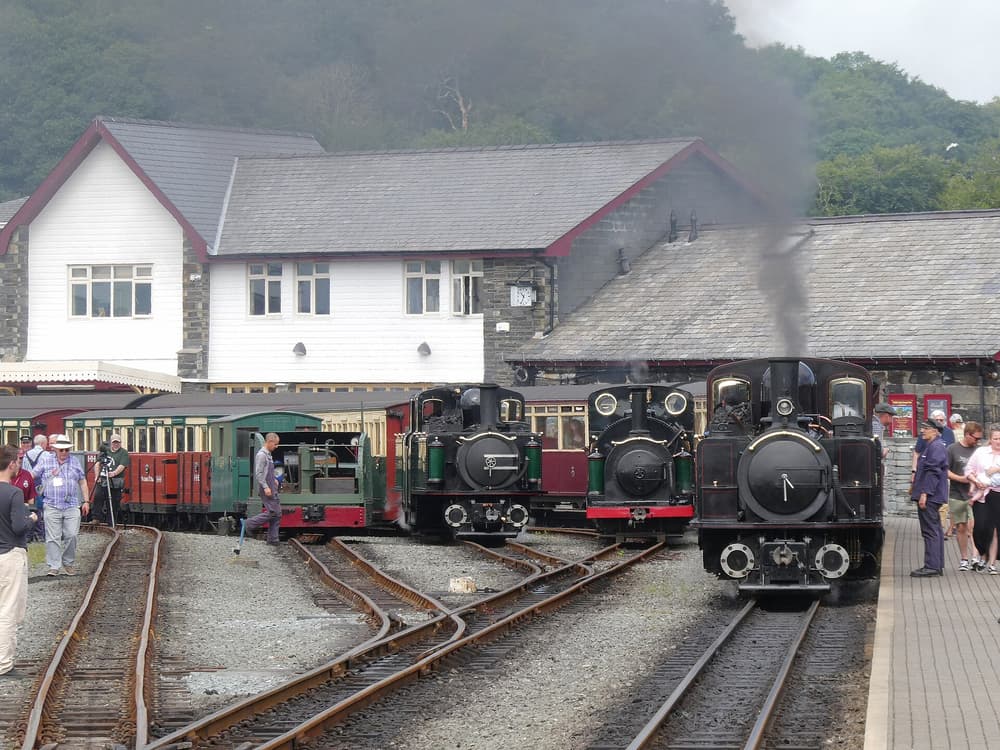
- Ffestiniog Railway: steam trains from Porthmadog into the mountains.
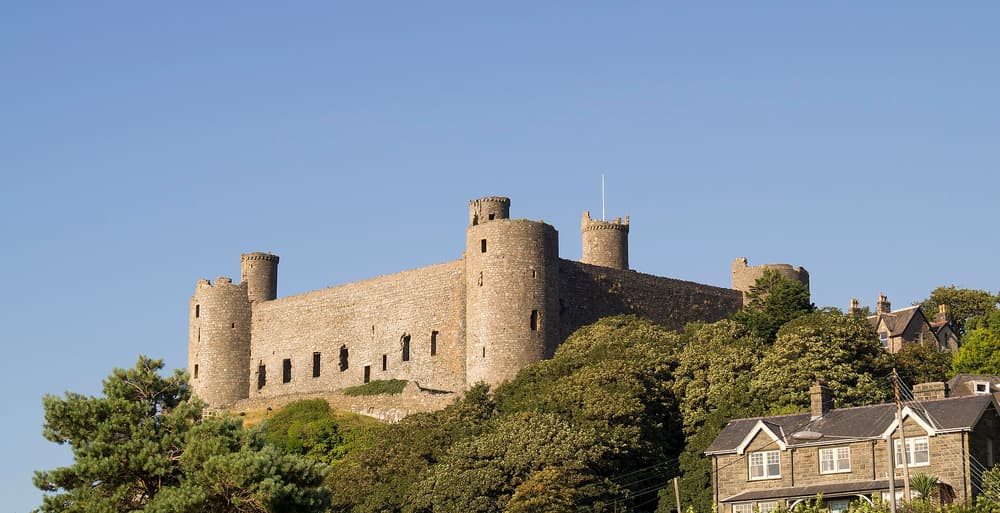
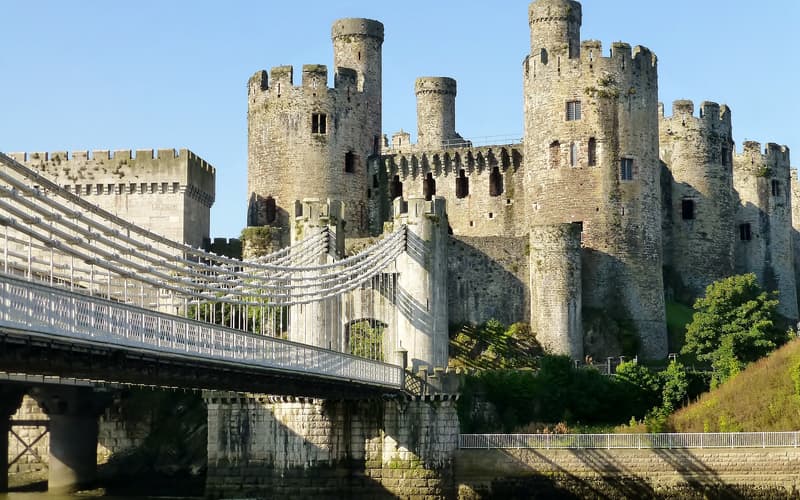
- Harlech Castle: a UNESCO-listed castle with a dizzying bridge entrance.
- The Prisoner: the cult TV series filmed here.
Quick facts
| Where | Near Porthmadog, Gwynedd, north-west Wales |
|---|---|
| Built | 1925–1975 by Clough Williams-Ellis |
| Entry | Ticketed for day visitors; hotel guests included |
| Ideal stay | Half a day, or a night in the village |
| Best for | Architecture, gardens, photography |
| Getting around | On foot; train to Minffordd station |
How long to stay & where to base yourself
A visit takes half a day. For a memorable night, stay in the village itself: rooms in Hotel Portmeirion, Castell Deudraeth and village cottages let you wander after the day visitors have gone. Porthmadog is the practical base for more choice.