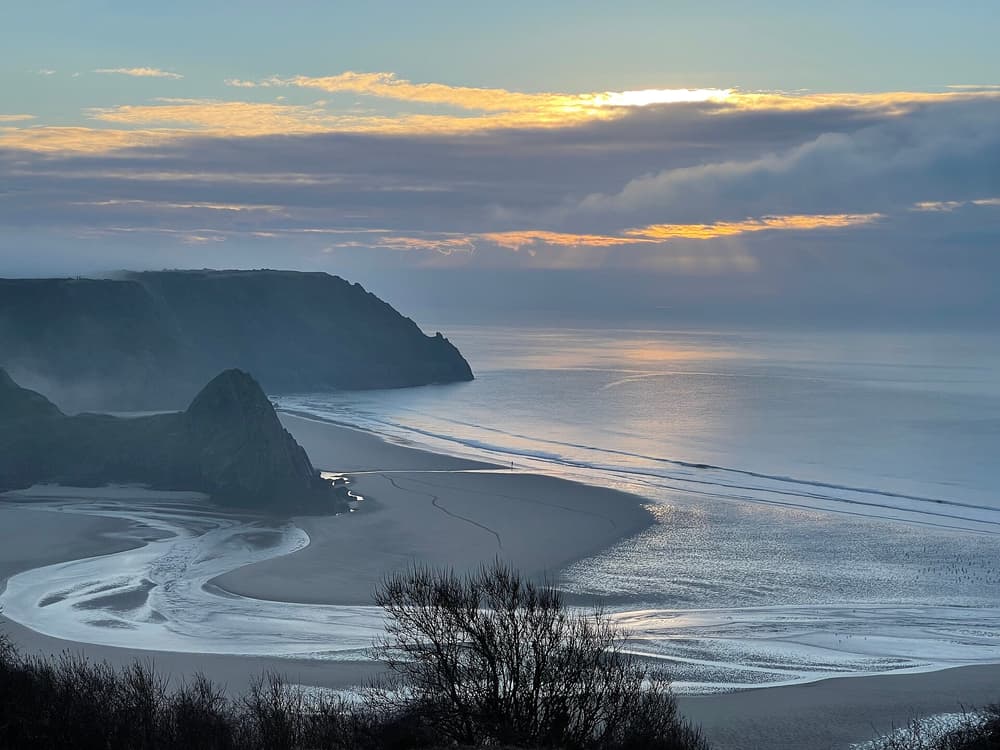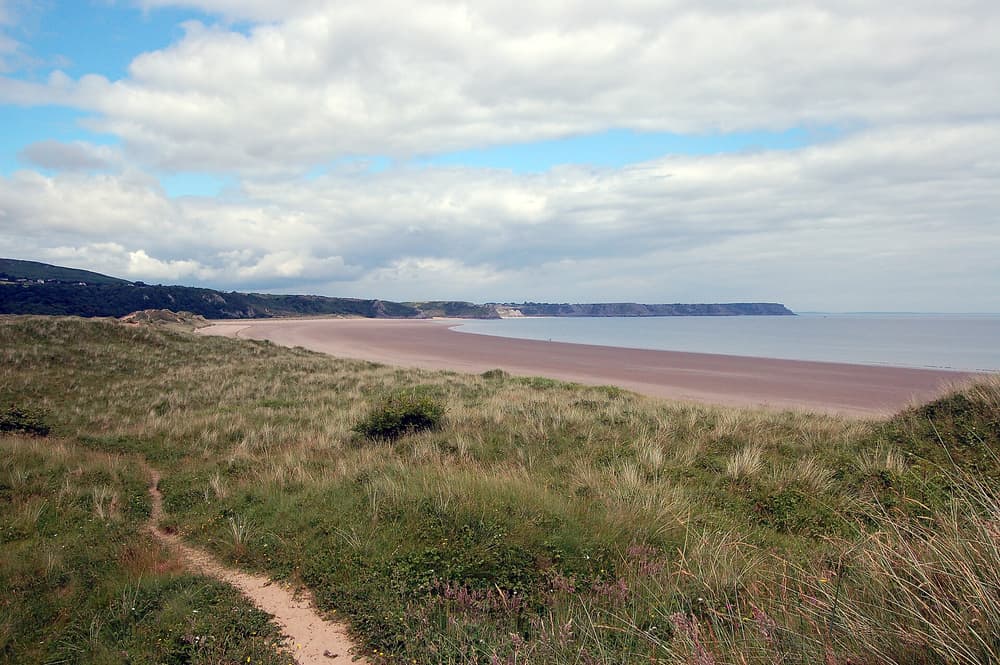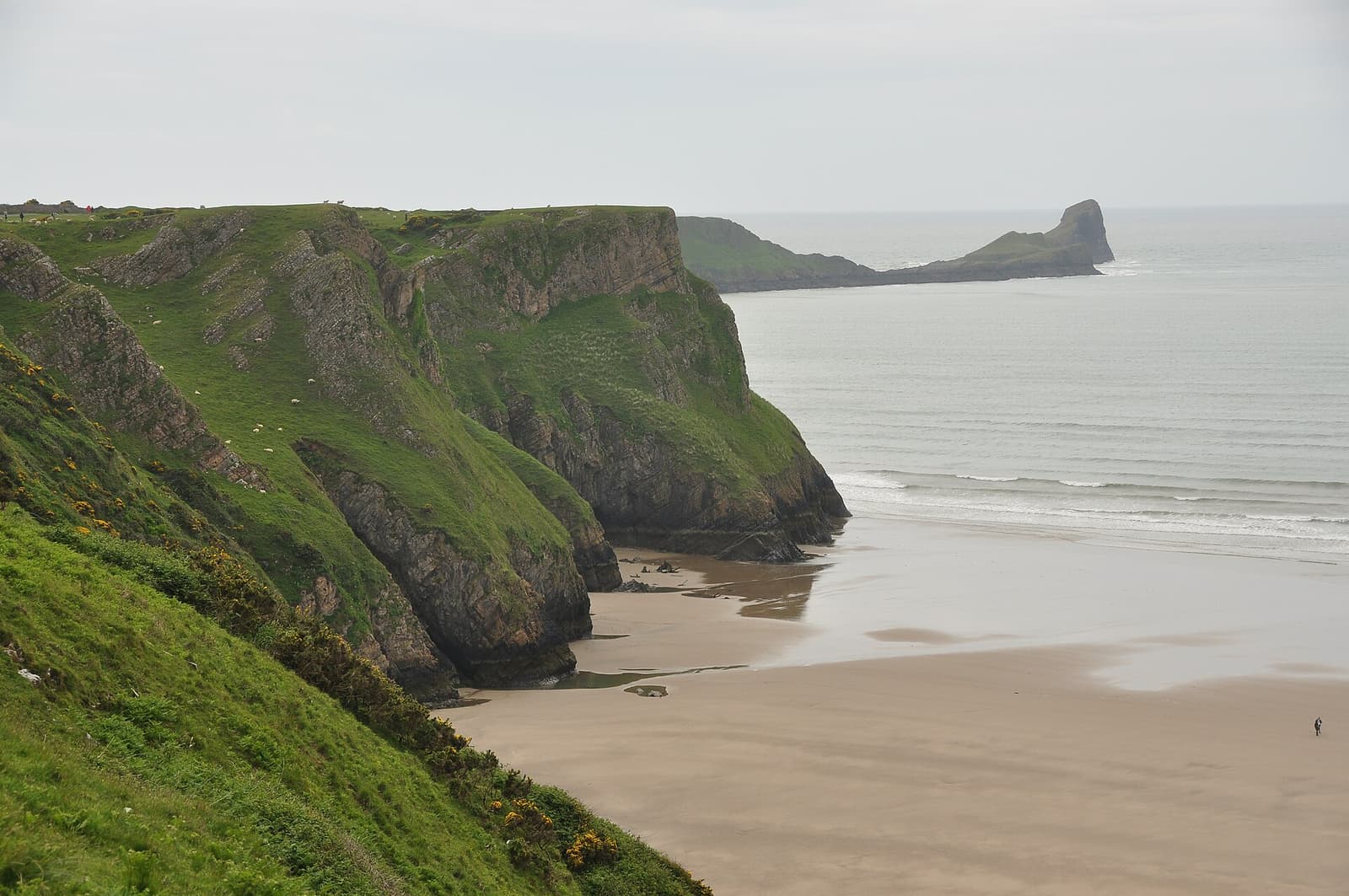
In 1956 the Gower Peninsula became the first place in Britain to be named an Area of Outstanding Natural Beauty. In about 25 km it packs in limestone cliffs, salt marshes, castles and a string of bays, ending in the great sweep of Rhossili and the snake-like tidal island of Worm’s Head.
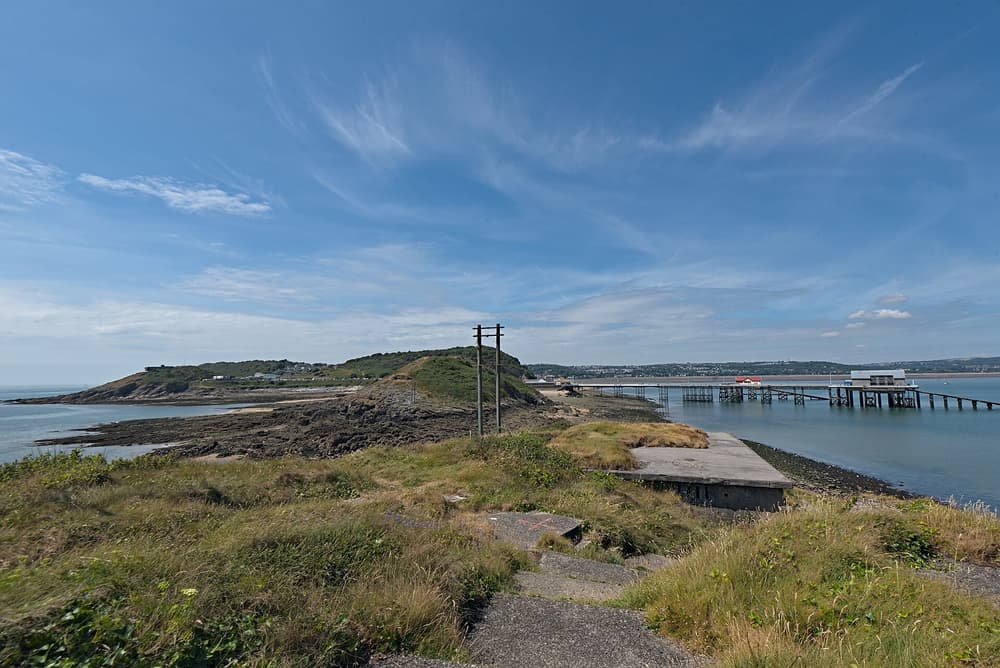
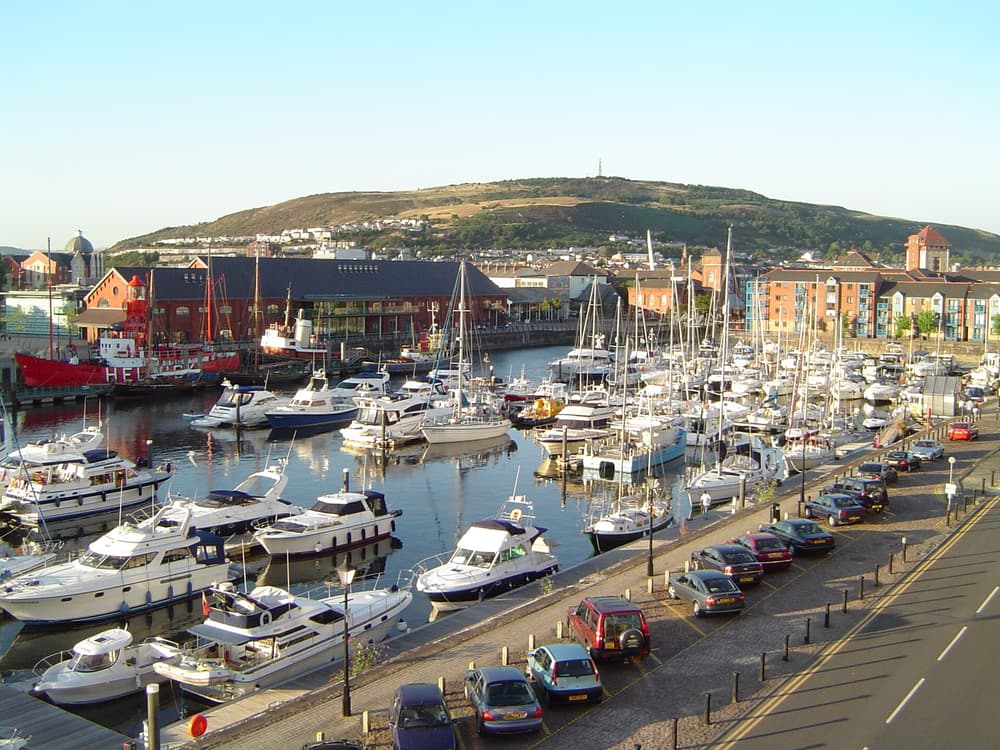
At its gateway is Swansea (Abertawe), Wales’s second city and birthplace of the poet Dylan Thomas, who called it an “ugly, lovely town”. Its seafront curves round to Mumbles, a Victorian village with a pier, a castle and ice-cream parlours. For more on the bay, see our sister site SwanseaBay.com.
Highlights
- Rhossili Bay and Worm’s Head: a 5 km beach and a tidal island walk.
- Three Cliffs Bay: limestone pinnacles, a river and a castle ruin.
- Mumbles: a pier, a lighthouse, Oystermouth Castle and ice cream.
- Swansea: the indoor market, maritime quarter and free museums.
- Oxwich Bay: a sheltered beach with dunes and woods.
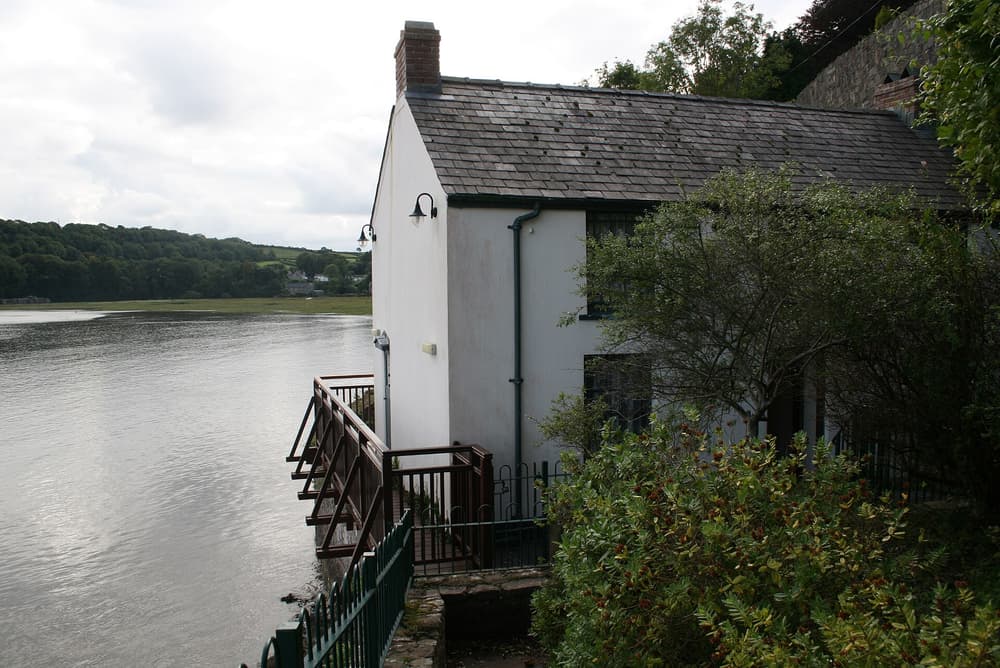
- Dylan Thomas: his birthplace in Swansea and his Boathouse at Laugharne.
Quick facts
| Where | South Wales, west of Swansea |
|---|---|
| Designation | First AONB in Britain (1956) |
| From Cardiff | About 1 hour by car or train to Swansea |
| Ideal stay | 2–3 days |
| Best for | Beaches, coastal walks, surfing, literature |
| Getting around | Car; buses from Swansea to the main bays |
How long to stay & where to base yourself
Spend two or three days. Mumbles is the best all-round base, with restaurants and buses to both Swansea and Gower. Stay in Swansea for the city and transport links, or on the peninsula itself (Rhossili, Oxwich, Reynoldston) for peace and beaches.