Beaumaris and the bridges are in the south-east corner; Newborough and Llanddwyn in the south-west; South Stack and Holyhead in the far west.
1 Beaumaris Castle
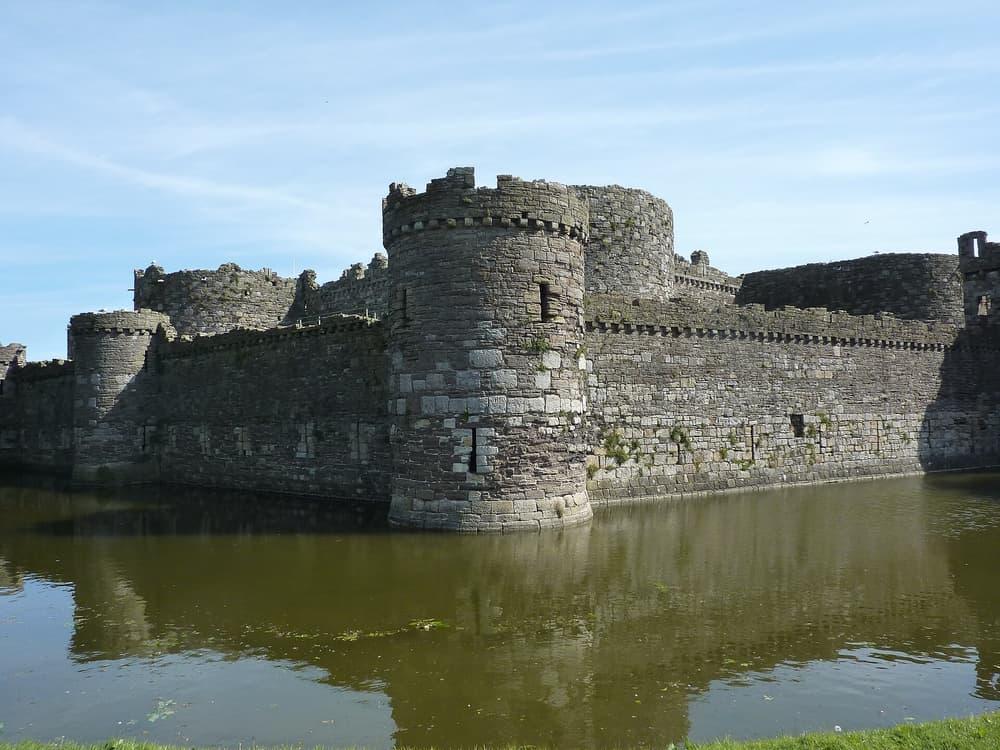
Begun by Edward I in 1295 and never finished, Beaumaris is a model of concentric design: two rings of walls, a moat and a dock for supply ships. It is often called the most technically perfect castle in Britain.
Practical: Cadw site; ticketed. Allow 1–1.5 hours. Beaumaris town has cafés and a pier.
2 Llanddwyn Island and Newborough
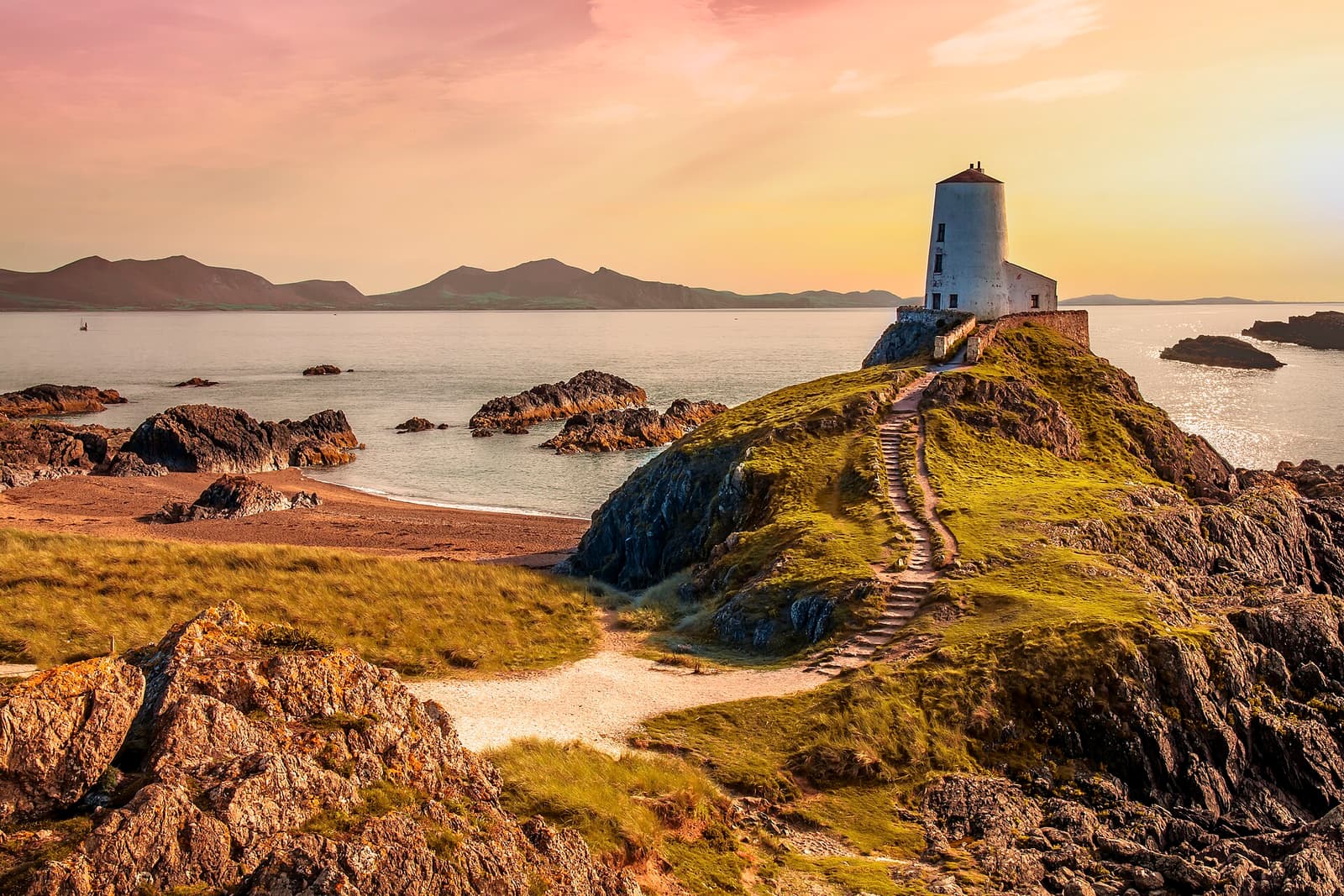
A tidal island at the end of a long beach backed by pine forest and dunes. It is linked to St Dwynwen, the Welsh patron saint of lovers, and has a ruined church, two lighthouses and views across to the mountains.
Practical: Paid parking at Newborough Forest; about 30–40 minutes’ walk. Cut off at the highest tides.
3 South Stack
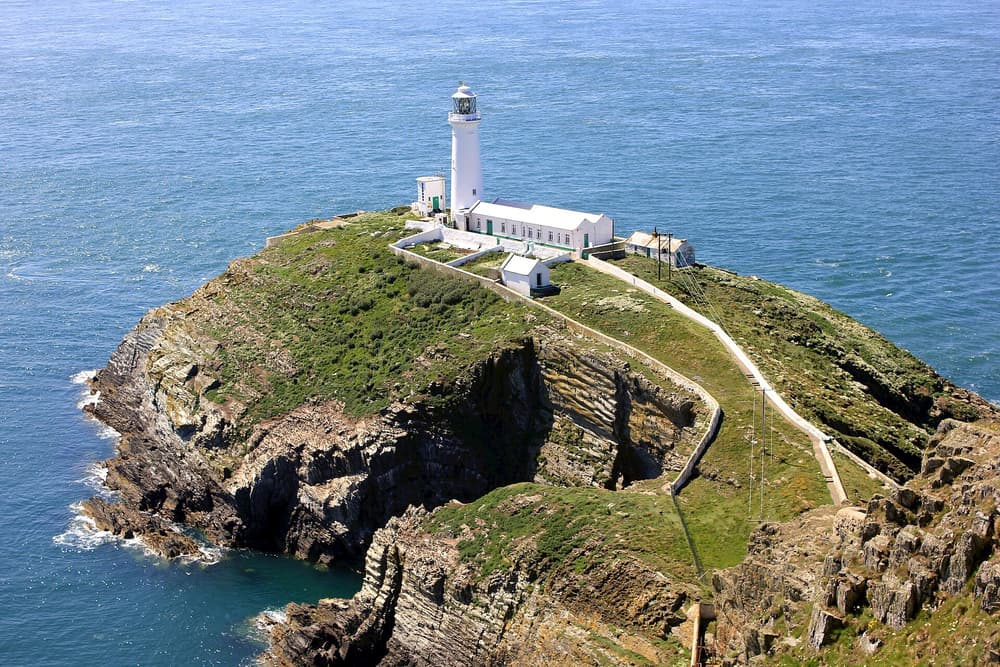
A lighthouse built in 1809 on a rock below sheer cliffs, reached by a long flight of steps and a bridge. The RSPB reserve on the cliffs above is home to guillemots, razorbills and choughs, and sometimes puffins.
Practical: RSPB reserve free; lighthouse tours seasonal and ticketed.
4 The Menai bridges
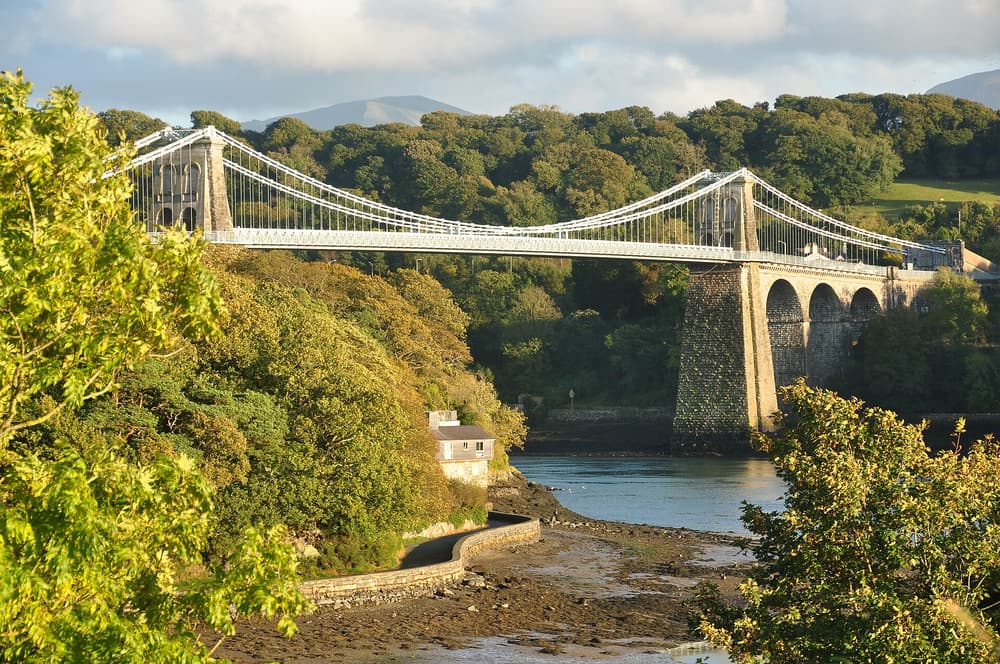
Thomas Telford’s Menai Suspension Bridge opened in 1826 to carry the London–Holyhead road; Robert Stephenson’s Britannia Bridge followed for the railway. Walk across the suspension bridge or view it from the Belgian Promenade in Menai Bridge town.
Practical: Free; the footway on the suspension bridge is narrow.
5 Llanfairpwllgwyngyll
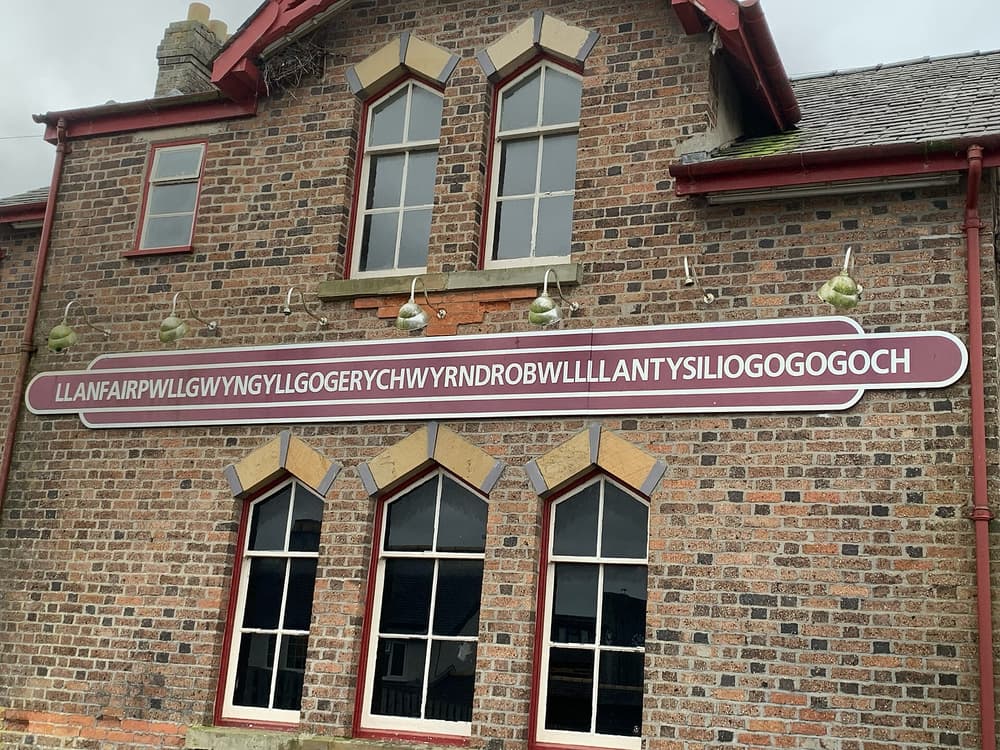
The village whose name was stretched in the nineteenth century into a 58-letter tourist attraction. Photograph the sign at the station and climb the Marquess of Anglesey’s Column nearby for views.
Practical: Free; the station is on the Holyhead line.
6 Bryn Celli Ddu
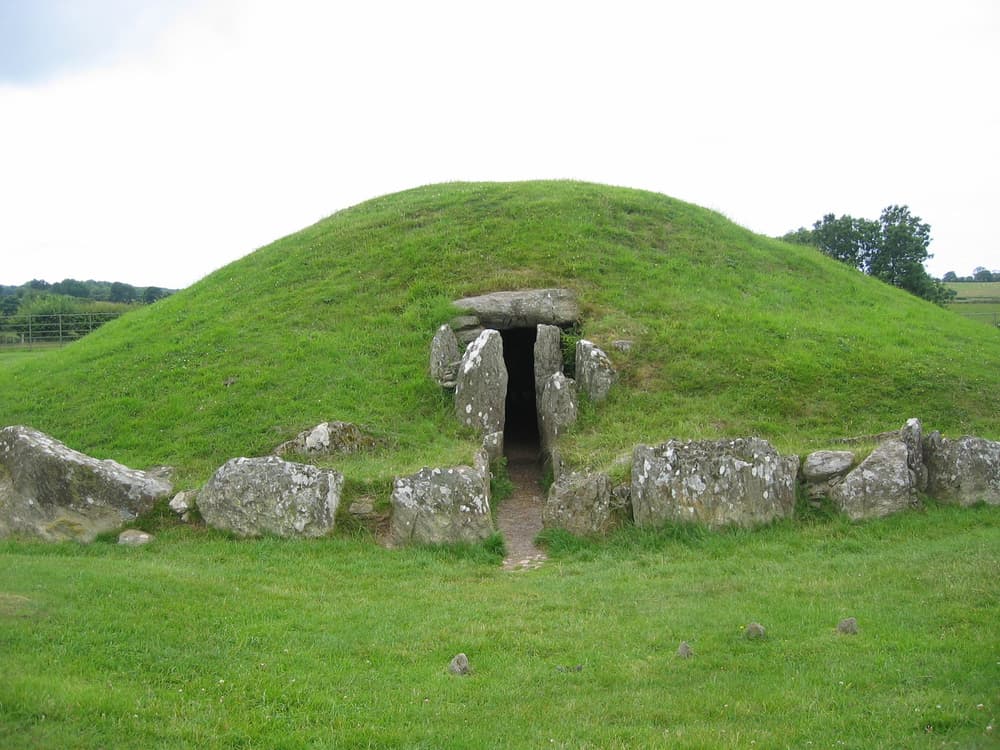
A Neolithic passage tomb in a field near the Menai Strait. On the summer solstice the rising sun shines down its passage into the inner chamber.
Practical: Cadw site; free. Short walk from a small car park.